Phonics Teacher Training: Skills and Methods Every Phonics Teacher Should Learn
Home/Blogs
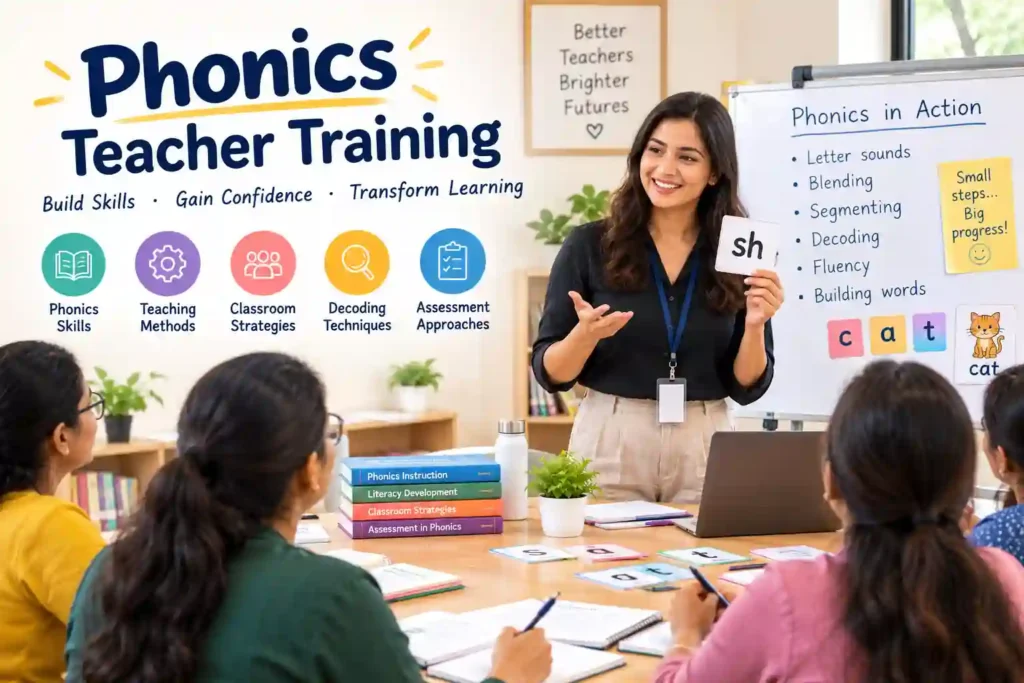
Phonics teacher training helps educators develop the knowledge and practical skills needed to teach sounds, blending, decoding, and early reading effectively. A good phonics course for teachers can also help educators understand different teaching approaches, plan suitable lessons, and support learners with different phonics needs.
This guide covers the key phonics teacher skills, effective phonics teaching methods and classroom strategies, phonics decoding strategies, assessment approaches, and the differences between analytic and synthetic phonics.
What Skills Should Phonics Teachers Learn?
Phonics Knowledge and Sound Awareness
Blending, Segmenting, and Pronunciation Skills
Lesson Planning and Modelling Skills
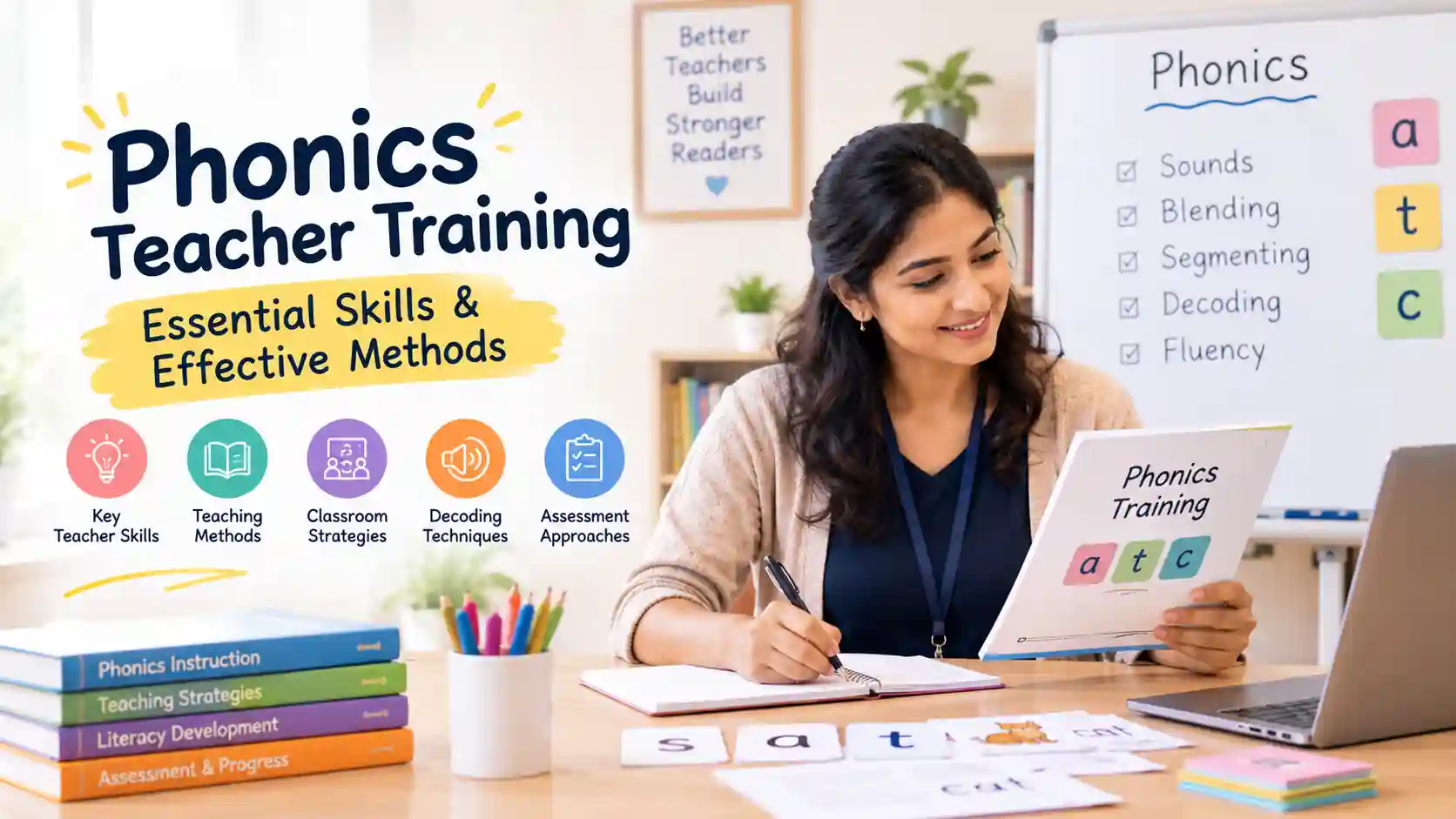
Which Phonics Teaching Methods Are Most Effective?
Systematic and Explicit Phonics Instruction
Multisensory Phonics Teaching
Which Phonics Teaching Strategies Work Best in the Classroom?
Effective classroom strategies help teachers turn phonics methods into practical learning activities. The strategy should keep learners actively involved while giving them regular opportunities to listen, respond, practise, and apply their phonics knowledge.
Phonics Games and Activities
Phonics games and activities can make practice more engaging without taking away from the learning goal. Teachers can use sound-matching games, word-building activities, picture cards, or simple reading challenges to reinforce the target sounds and patterns. Activities should be linked to the skill being taught rather than used only for entertainment.
Supporting Different Learning Needs
Learners may progress through phonics at different rates, so teachers need to adjust activities when necessary. Some learners may benefit from additional modelling or simpler words, while others may be ready for more challenging word patterns. Observing how learners respond during activities helps teachers decide when to provide extra support or increase the level of challenge.
How Can Teachers Use Phonics Decoding Strategies Effectively?
Phonics decoding strategies help learners use their knowledge of sounds and letter patterns to read unfamiliar words. Teachers can support this process by showing learners how to break words into manageable parts and blend the sounds together.
Sound-Blending and Word Decoding
Teachers can model how individual sounds are combined to read a word, then provide guided practice with words that match the phonics patterns already taught. Learners can gradually move from simple words to more complex patterns as their decoding skills develop.
Supporting Struggling Readers
Some learners may need additional support when they find it difficult to connect sounds with letters or blend sounds smoothly. Teachers can identify the specific part of decoding causing difficulty and provide focused practice with suitable words and sound patterns. Short, guided activities can help learners build accuracy before moving to more challenging words.
What Are Phonics Assessment Strategies?
Phonics assessment strategies help teachers track learners’ phonics progress and identify areas that need more support. Regular checks also help teachers plan suitable instruction based on learner needs.
Monitoring Progress and Identifying Learning Gaps
Teachers can use short activities, word-reading tasks, and sound recognition checks to monitor learner progress. These checks can show which phonics skills learners have understood and where they are still experiencing difficulty. Keeping simple records can help teachers notice changes in performance over time. This makes it easier to identify learning gaps and provide support at the right stage.
Adapting Instruction Based on Assessment
Assessment results can help teachers decide whether to move forward, revisit a phonics skill, or provide additional support. If learners struggle with a particular sound or word pattern, teachers can adjust upcoming activities to address that difficulty. Learners who need more help can receive focused practice, while others can continue with new skills. This makes phonics instruction more responsive to learner needs.
Analytic and Synthetic Phonics: What Is the Difference?
Analytic and synthetic phonics use different approaches to help learners understand the relationship between sounds and letters. Knowing how they differ helps teachers understand what each approach involves and how it can be used during phonics instruction.
| Aspect | Analytic Phonics | Synthetic Phonics |
|---|---|---|
| Main focus | Identifying sounds within familiar words | Learning individual sounds and blending them |
| Teaching approach | Learners analyse sounds in known words | Learners combine individual sounds to form words |
| Word reading | Uses familiar words and sound patterns | Builds words through sound-by-sound blending |
| Teacher focus | Helping learners notice sound relationships | Teaching sound-letter relationships and blending |
Both approaches aim to develop learners’ understanding of sounds and their connection to reading. Teachers can consider the learners’ existing knowledge and lesson objectives when deciding how to use these approaches.
Conclusion
Phonics teacher training helps teachers develop the knowledge and practical skills needed to deliver clear, structured, and engaging phonics lessons. Strong phonics teacher skills, suitable teaching methods, and effective classroom strategies help teachers support learners as they build sound, blending, and decoding skills.
By using effective decoding and assessment strategies, teachers can monitor progress and support different learning needs. Understanding analytic and synthetic phonics also helps teachers plan suitable lessons.
Frequently Asked Questions
Phonics teachers should learn sound awareness, pronunciation, blending, segmenting, decoding, lesson planning, and learner support skills.
Systematic and explicit instruction and multisensory teaching are useful methods for teaching phonics in a structured way.
Repetition, practice, phonics games, activities, and adapting support to different learning needs can make classroom phonics practice more effective.
Teachers can model sound blending, practise word decoding, and provide focused support for learners who struggle with specific decoding skills.
Teachers can use sound recognition checks, word-reading tasks, and short activities to monitor progress and identify learning gaps.
Analytic phonics works from familiar words to sound patterns, while synthetic phonics starts with individual sounds and blends them to form words.
Enquire Form
Our Courses
- Phonics
- Grammar & Writing
- Spoken English
- Teacher Training