Phonics Activities for LKG Children to Build Early Reading Skills
Home/Blogs
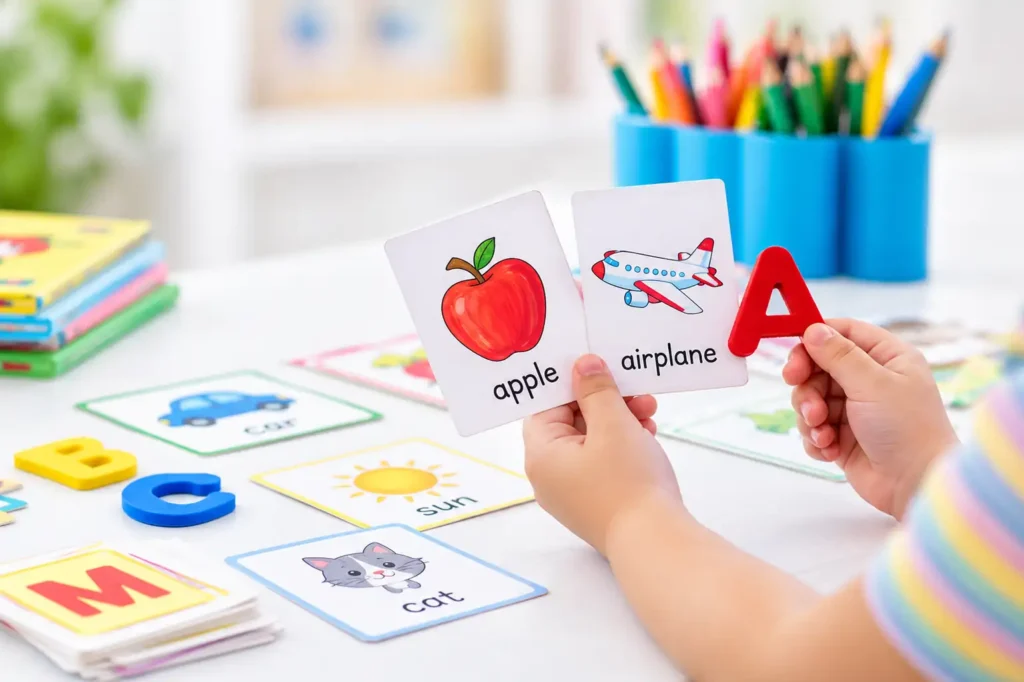
Learning to read starts with understanding letters and their sounds. Phonics activities for LKG children can make this early learning more fun through games, pictures, songs, and simple word activities. These activities let children listen, speak, match, and try reading as they learn at their own pace and build early reading skills.
What Is Phonics for Children?
Phonics help children understand the connection between letters and their sounds. They learn that letters represent sounds and that these sounds can be joined to read simple words.
For example, children can learn that B makes the /b/ sound in ball, bat, and bus. Later, they can practice joining sounds to read short words.
At this age, phonics should be simple and enjoyable. Familiar words and short activities can help children learn without feeling pressured.
Why Are Phonics Activities Important for Children?
Phonics activities give children practical ways to learn, rather than simply memorizing letters. They help children:
- Recognize familiar letters
- Connect letters with their sounds.
- Listen for sounds in words.
- Join sounds like reading simple words.
- Build early reading confidence.
Letter Recognition
Children need to recognize letters before using them while reading them. Letter cards, books, and matching games can help them notice different letters and remember their shapes.
Sound Recognition
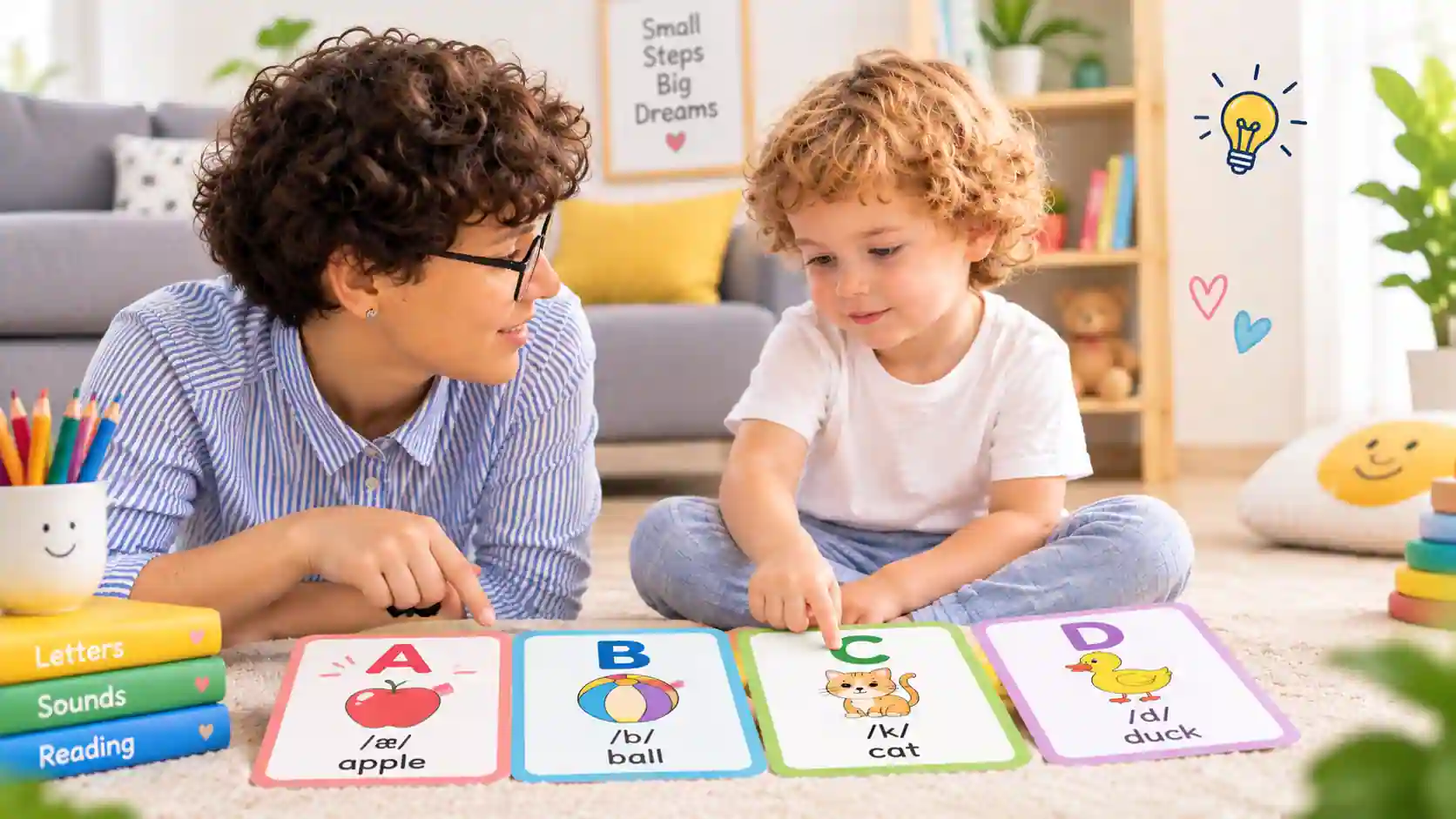
Children also need to hear the sound connected to each letter. Saying, repeating, and identifying sounds helps them understand how spoken sounds connect to written letters.
Early Reading Confidence
Recognizing a letter, identifying a sound, or reading a short word can give children a sense of achievement. These small successes can encourage them to keep trying.
How to Practice Phonics at Home
How Phonics Builds Early Reading Skills
- Phonics practice at home can be simple and fun. Parents can use everyday moments instead of preparing a formal lesson.
- Ask your child to find something that starts with /b/, point out a letter while reading, or play a quick sound-matching game using toys.
- Keep practicing short and give the child time to answer. If they make a mistake, repeat the sound and let them try again.
- A few minutes of regular practice can help children become familiar with sounds without making reading difficult.
- Phonics help children use sounds to work out simple words. For example, when a child knows /c/, /a/, and /t/, they can practice joining the sounds of reading cats.
- As children learn more letter-sound connections, they can begin reading new short words using what they already know. This helps them move from recognizing letters to using them while reading.
- With regular practice, children can gradually recognize simple words, blend sounds, try unfamiliar words, and read with less help.
6 Fun Phonics Activities
Letter and Sound Matching
- Give the child a few letters and picture cards. Show B and say /b/. Ask the child to find a picture such as a ball that begins with the same sound.
How to do it:
- Show one letter.
- Say its sounds.
- Give two or three picture choices.
- Ask the child to find the match.
Benefit: Helps children connect letters, sounds, and familiar words while improving listening skills.
Beginning Sound Game
Choose words children already know. Show a picture of a sun, say the word slowly, and ask, “What sound do you hear first?”
Try words such as ball, bat, and fish.
Benefit: Helps children notice the first sound in a word and supports early reading skills.
Sound Hunt
Choose a sound such as /b/ and ask the child to find things around the room that begin with it. They may find a book, a bag, or a ball.
Benefit: Helps children notice sounds in everyday words and connect learning with their surroundings.
Phonics Songs
Choose a short phonics song and let children sing, clap, or use simple actions while repeating the sounds.
How to do it:
- Choose a short song.
- Sing the sounds together.
- Repeat the important sounds.
- Add simple actions.
Benefit: Repeated listening and speaking helps children become more familiar with letter sounds while keeping practice playful.
Build Simple Words
When children know a few sounds, help them put those sounds together. Start with a simple word such as CAT.
How to do it:
- Show C, A, and T.
- Say each sound separately.
- Let the child repeat them.
- Slowly join the sounds.
- Read the CAT together.
Benefit: Introduces sound blending and shows children how individual sounds form a word.
Simple Phonics Books
Choose picture books with short, familiar words. Point to letters the child knows and let them try one or two easy words.
How to do it:
- Read slowly together.
- Point to familiar letters.
- Ask the child to identify a sound.
- Let them try a simple word.
- Read difficult words together.
Benefit: Gives children a chance to use their phonics knowledge while becoming more comfortable with books.
Tips for Parents and Teachers
Phonics works best when children feel comfortable and have enough time to practice.
- Keep it short: A few minutes is enough for young children.
- Make it fun: Use games, songs, pictures, and everyday objects.
- Start slowly: Introduce a few sounds at a time.
- Use familiar words: Choose words children already know.
- Let children try: Give them time to think before helping.
- Correct gently: Repeat the sound and allow another attempt.
- Praise their effort: Encourage them when they listen, try, or answer.
- Practice regularly: Short, consistent practice can support better recall.
The goal is not to make children read quickly. It is to help them feel comfortable with letters, sounds, and simple words. When phonics is taught through enjoyable activities, children can learn naturally while building a foundation for early reading.
Conclusion
Phonics can make the first steps of reading easier and more enjoyable for LKG children. Simple activities like sound games, songs, word building, and reading books can help children learn letters and sounds at their own pace.
Regular practice, patience, and support can help children become more comfortable with reading. Keep learning fun, give them time to try, and celebrate their small steps as they learn.
Frequently Asked Questions
Phonics help children learn the sounds that letters make. They learn to recognize a letter, say its sound, and use that sound when reading simple words.
Learning letter sounds gives children a good start with reading. It helps them understand simple words and read with more confidence.
You can use games, songs, pictures, books, and everyday objects around the house. Start with a few easy letters and sounds and practice them together.
Children don't need long practice sessions. Simple phonics practice as your child gets tired or loses interest, keep the session shorter.
Children can start learning phonics when they begin to recognize letters and show interest in sounds. LKG is a good time to start with simple letter sounds.
Try songs, games, pictures, drawing, and simple word activities. You can also ask your child to find letters or sounds in things around the house.
Don't worry or rush your child. Go back to easy sounds they already know, practice slowly, and give them time to try again. A little encouragement and praise can help them feel more comfortable.
Enquire Form
Our Courses
- Phonics
- Grammar & Writing
- Spoken English
- Teacher Training