How to Teach Phonics to Kids: A Complete Guide for Parents
Home/Blogs
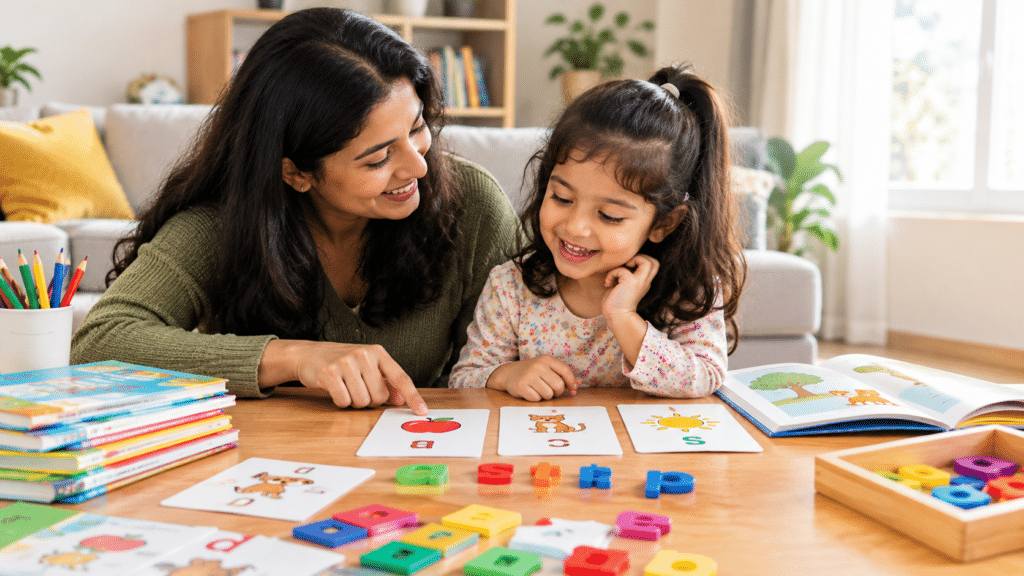
Learning to read becomes much easier when children understand how letters and sounds work together. Phonics gives children a practical system for decoding unfamiliar words instead of relying only on memorization or guessing.
For parents, the challenge is often knowing where to begin, what to teach next, and how much practice is enough. This guide explains how to teach phonics to kids step by step, with simple activities you can use at home and guidance on when professional support may help.
What Is Phonics and Why Does It Matter?
Phonics teaches children the relationship between letters or groups of letters and the sounds they represent. Once children understand these relationships, they can use them to decode written words.
For example, a child who knows the sounds represented by c, a, and t can blend them to read cat. This is different from memorizing the whole word as a picture.
Phonics supports early reading because it gives children a repeatable strategy for approaching unfamiliar words. Effective instruction is generally systematic and explicit: children learn sound-letter relationships, practice them, and then apply them while reading.
Parents can reinforce phonics by:
- Practicing a few sounds at a time.
- Asking children to identify beginning and ending sounds.
- Using simple decodable words.
- Reading age-appropriate books together.
- Celebrating effort rather than rushing to correct every mistake.
How to Teach Phonics to Kids
The most useful approach is to move from simple skills to more complex ones. Avoid introducing too many sounds or spelling patterns at once.
A basic progression can look like this:
- Introduce letter sounds – Begin with common consonants and short vowels.
- Practice sound recognition – Ask your child to identify a sound when shown a letter.
- Introduce blending – Combine known sounds to read simple words.
- Read CVC words – Practice words such as cat, sun, map, and sit.
- Introduce digraphs and blends – Move to patterns such as sh, ch, th, bl, and st.
- Apply phonics to sentences – Let your child read short, controlled sentences.
Keep sessions short and focused. Five to fifteen minutes of purposeful practice can be more manageable for a young child than a long lesson that ends in frustration. The goal is consistent practice and gradual independence.
How to Teach Phonics at Home
You don’t need a lot of resources to practice phonics at home. Simple materials such as paper, pencils, books, magnetic letters, or everyday objects around the house can make phonics practice engaging and effective.
Begin by reviewing sounds your child already knows. Then introduce one small skill and give your child opportunities to hear, say, build, read, and write it.
For example, if you are practicing /m/, ask your child to find objects beginning with that sound, write or trace m, and then combine it with familiar vowel sounds to create simple words.
Phonics Activities Using Household Items
Turn everyday objects into learning tools:
- Object hunt: Find items beginning with a target sound.
- Bottle-cap letters: Write letters on bottle caps and use them to build words.
- Paper cards: Create simple letter and sound cards.
- Sound sorting: Separate objects according to their beginning sounds.
- Word building: Use small paper squares with letters to make CVC words.
Keep activities playful. If your child becomes frustrated, switch activities rather than turning practice into a test.
Why Traditional Alphabet Learning Falls Short
Turn everyday objects into learning tools:
Knowing the alphabet song or recognizing letter names does not automatically mean a child can decode words. Reading requires children to connect written symbols with sounds and then combine those sounds.
For example, knowing that C is called “see” is different from knowing the sound /k/ in cat. Alphabet knowledge is valuable, but phonics adds the sound-to-print connection children need for decoding.
How to Teach Blending Phonics Sounds
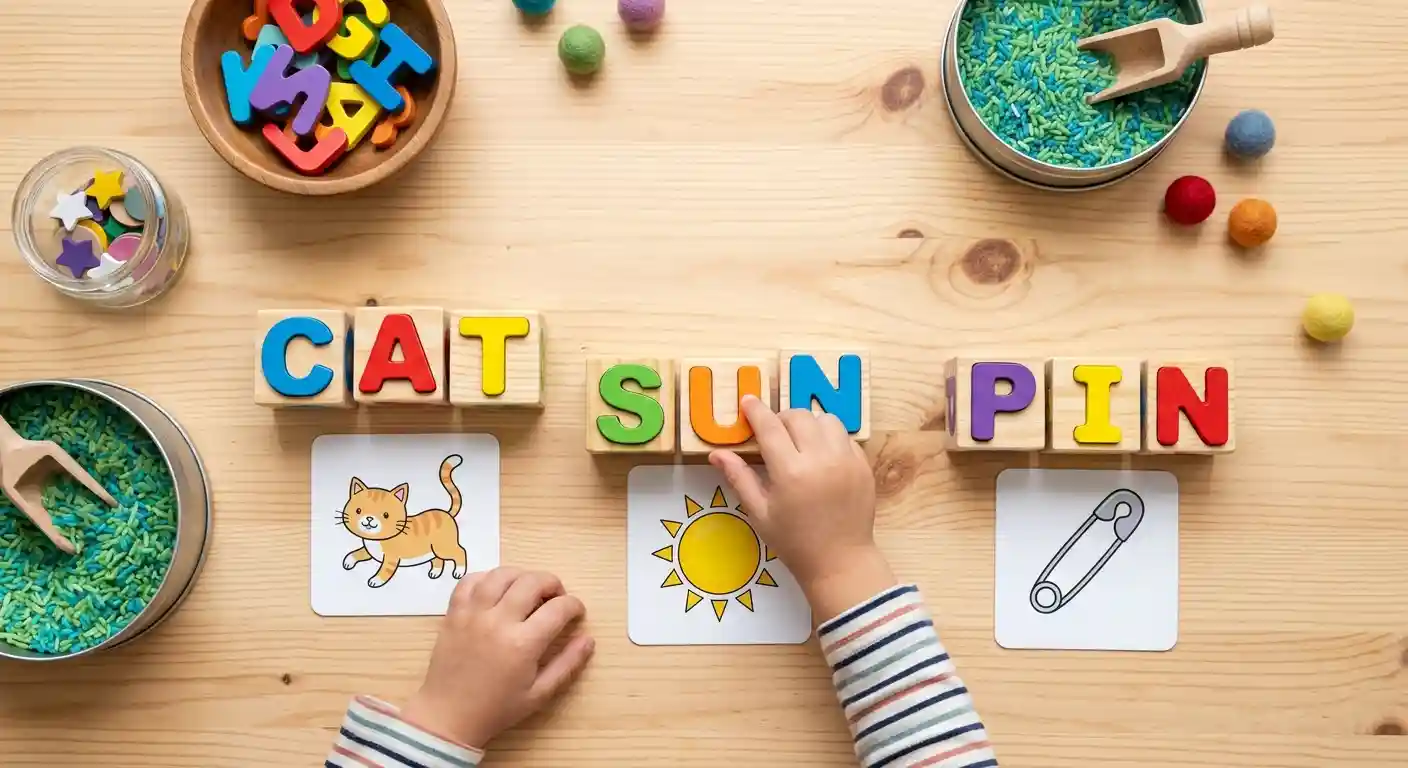
Blending means combining individual sounds to read a complete word. It is a key step between knowing letter sounds and reading independently.
Start with words containing sounds your child already knows.
For sun:
/s/ → /u/ → /n/ → sun
At first, say the sounds slowly and continuously rather than leaving large pauses between them. You can slide your finger under the letters as your child blends them.
Try this sequence:
- Say each sound.
- Ask your child to repeat the sounds.
- Stretch the sounds together.
- Say the complete word.
- Repeat with another word using the same known sounds.
Use decodable words before introducing words containing spelling patterns your child has not learned.
Phonics Reading Guide for Parents
Phonics should not exist separately from reading. Children need opportunities to apply the skills they learn to actual words and sentences.
Choose books that match the phonics patterns your child has already practiced. If your child is learning short vowels and CVC words, begin with texts containing plenty of those patterns.
During reading, ask:
- “What sound does this letter make?”
- “Can you blend these sounds?”
- “What word did you make?”
- “Can you find another word with the same sound?”
Avoid asking your child to guess an unfamiliar word only from its picture. Encourage them to look carefully at the letters and use the decoding skills they have learned.
How to Teach Digraphs to Kindergarten
A digraph is a combination of two letters representing one sound, such as sh, ch, th, or ph.
Introduce digraphs after your child has a reasonable foundation in individual letter sounds. Start with one pattern at a time.
For example, with sh, practice:
- ship
- shop
- fish
- shell
Have your child say the sound, identify the digraph in words, build words using letter cards, and then read short sentences containing the pattern.
Remember that digraphs and consonant blends are different. In a blend such as st, both consonant sounds are heard. In sh, the two letters work together to represent one sound.
What Age to Start Phonics for Toddlers
There is no single birthday at which every child must begin formal phonics. Early literacy can begin through playful activities such as rhyming, listening to sounds, singing, sharing books, and noticing letters. More structured phonics can be introduced as a child develops the attention and language skills needed for the activity.
For toddlers, keep expectations realistic. The goal is not to make a two- or three-year-old complete lengthy reading lessons. Instead, build familiarity with sounds, words, books, and letters.
Phonics Activities for Toddlers
Try simple activities such as:
- Singing rhyming songs.
- Clapping syllables in names.
- Finding objects that begin with a particular sound.
- Looking for familiar letters on signs and packaging.
- Reading picture books aloud every day.
- Playing simple sound-matching games.
Follow your child’s interests. Short, enjoyable activities are usually easier to sustain than formal lessons.
Best Phonics Books for Toddlers
Choose books based on your child’s developmental stage rather than buying a book simply because it contains the word “phonics.”
For younger children, look for:
- Rhyming and repetitive stories.
- Large, clear illustrations.
- Simple vocabulary.
- Opportunities to identify sounds.
- Short texts that encourage participation.
As children begin decoding, gradually introduce books containing words that use the phonics patterns they have learned.
The 5 Essential Stages: How to Teach Phonics to Kids Step-by-Step
A simple five-stage framework can help parents understand progression:
Stage 1: Build sound awareness
Practice listening, rhyming, syllables, and identifying sounds in spoken words.
Stage 2: Learn letter-sound relationships
Introduce common letters and the sounds they represent. Review previously learned sounds frequently.
Stage 3: Blend simple words
Use familiar sounds to build and read CVC words such as map, sit, and dog.
Stage 4: Introduce more complex patterns
Progress to consonant blends, long-vowel patterns, and other spelling patterns as appropriate.
Stage 5: Apply phonics while reading
Move from isolated word practice into sentences and decodable texts. Encourage children to use their decoding skills independently.
This progression should be flexible. Children do not all move through phonics at exactly the same pace.
How to Teach Phonics to a 4-Year-Old
A four-year-old may be ready for more structured phonics practice, but lessons should still feel active and manageable.
Try a 10-minute routine:
- Review two or three familiar sounds.
- Introduce one new sound.
- Find objects containing that sound.
- Build one or two simple words.
- Read a short sentence or decodable text.
- Finish with a quick game.
If your child already knows many letter sounds, spend less time reviewing the alphabet and more time applying those sounds to words.
Common Phonics Mistakes Parents Make
Some common problems can make phonics unnecessarily difficult:
- Teaching too many sounds at once: Focus on a manageable set.
- Moving ahead too quickly: Make sure earlier skills are reasonably secure.
- Relying only on letter names: Connect letters with their sounds.
- Asking children to guess words: Encourage them to decode using known patterns.
- Using unsuitable books: Match reading material to the patterns being taught.
- Turning practice into a test: Keep sessions encouraging and interactive.
- Ignoring pronunciation: Model sounds clearly and consistently.
If a child repeatedly struggles with a particular skill, step back, review the foundation, and try a different activity.
Home Practice vs. Professional Coaching
Home practice is valuable because it gives children frequent opportunities to reinforce what they learn. Parents can make phonics part of everyday reading routines without needing lengthy lessons.
Professional coaching can provide a more structured sequence, guided practice, assessment, and feedback. It may be particularly useful when parents are unsure what to teach next or when a child needs more individualized support.
| Home Practice | Professional Coaching |
|---|---|
| Flexible schedule | Structured lessons |
| Familiar environment | Guided instruction |
| Easy daily repetition | Progress monitoring |
| Parent-led activities | Teacher-led activities |
These approaches do not have to compete. A child can benefit from structured instruction while continuing short phonics activities at home.
Phonics Classes Online for Kids
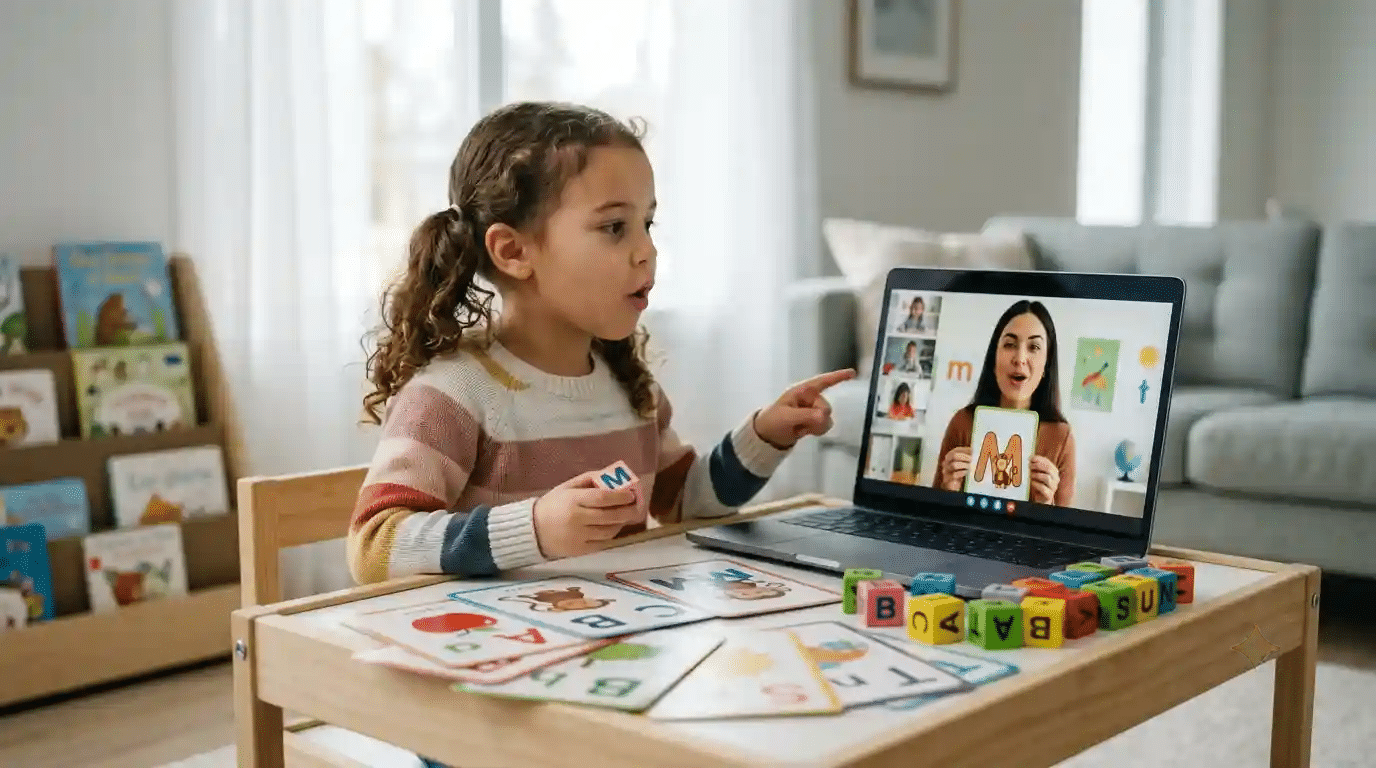
Online phonics classes can give children access to structured lessons from home. When comparing options, look beyond flashy activities and consider whether the program provides systematic instruction, opportunities for children to respond, appropriate reading materials, and feedback.
Parents can ask:
- What phonics sequence does the program follow?
- How long is each class?
- Are classes interactive?
- How is progress monitored?
- Are parents given practice activities?
- Are lessons suitable for the child’s age and current reading level?
- The right format depends on the child’s needs, learning style, schedule, and available support.
Offline Phonics Classes for Kids
For parents looking for offline phonics classes for kids, compare programs based on:
- Curriculum and teaching approach
- Class size and teacher experience
- Flexible schedule and student support
A trial class or assessment can help you understand whether the teaching approach matches your child’s current phonics level. Ask whether the program covers sound-letter relationships, blending, decoding, and progressive reading practice rather than focusing only on alphabet recognition.
Final Takeaways for Parents
Learning how to teach phonics to kids does not require complicated materials. Start with sound awareness and letter-sound relationships, move gradually into blending and word reading, and give your child regular opportunities to apply those skills.
Keep sessions short, positive, and consistent. Choose reading materials that match what your child has learned, avoid encouraging random guessing, and adjust the pace when a skill needs more practice.
If you want additional structure, consider a phonics program that provides a clear learning sequence and appropriate support. Start with a simple routine today, track your child’s progress, and build the next skill when the foundation is ready.
Frequently Asked Questions (Faqs)
Yes. Use household items, paper cards, toys, and books for sound-matching, letter recognition, and simple word-building activities.
Start blending familiar sounds into simple words such as cat, sun, and map. Once your child is comfortable, introduce more complex patterns.
If your child can recognize several letter sounds consistently, you can begin practicing simple blending with familiar sounds and short words.
Use short games, songs, object hunts, letter cards, and word-building activities. Keep lessons playful and avoid making every activity feel like a test.
Yes. Online classes can provide structured instruction, while short activities at home can reinforce the sounds, words, and reading skills taught during lessons.
Enquire Form
Our Courses
- Phonics
- Grammar & Writing
- Spoken English
- Teacher Training