
How to Help Children Blend Letter Sounds into Words
Home/Blogs
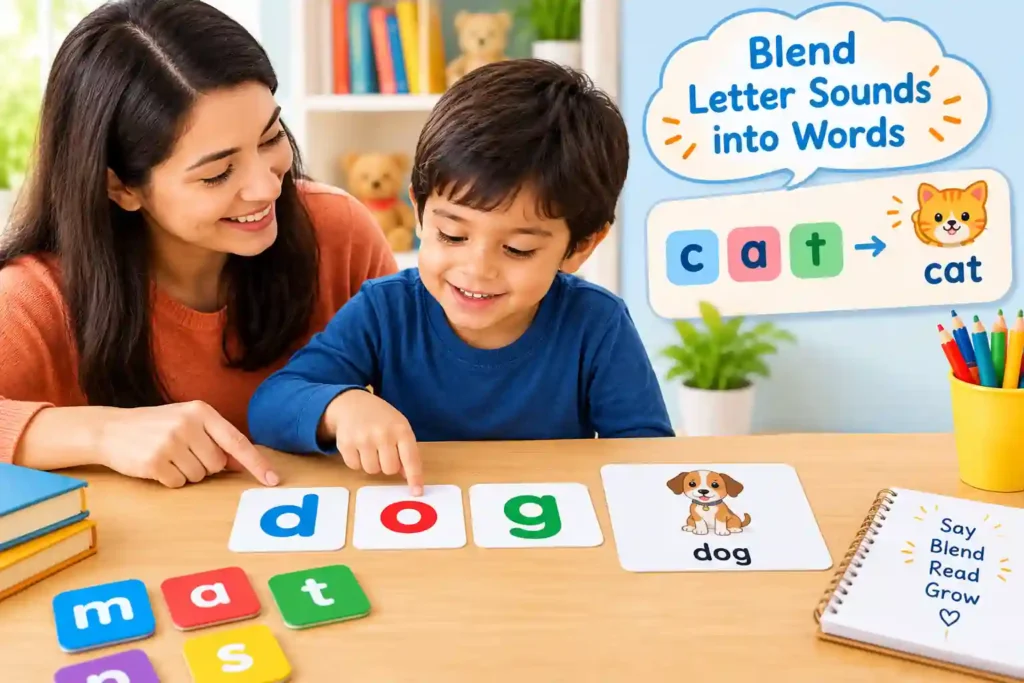
Learning to blend letter sounds into words is an important step in a child’s reading journey. It helps children understand how individual sounds come together to form words. For example, when children learn to connect the sounds /c/, /a/, and /t/, they can read the word “cat.” With regular practice, children can become more confident in reading simple words and sentences.
Parents and teachers can support this skill through simple instructions, playful activities, and short daily practice sessions. Start with familiar words, demonstrate how to connect sounds, and give children enough time to practise independently. A positive and patient approach makes early reading more enjoyable and helps children develop strong phonics skills.
What Is Sound Blending?
Blending phonics is an early reading skill that helps children combine individual letter sounds to read a complete word. For example, when children say the sounds /s/, /u/, and /n/ together, they can read the word “sun.” This process teaches them how letters and sounds work together to form words.
Children can start with simple words containing two or three sounds. Parents and teachers can model how to say each sound and then blend them smoothly. With regular practice, children can become more confident in recognising sound patterns and reading unfamiliar words.
Why Is Blending Letter Sounds Important for Children?
Blending letter sounds helps children develop essential early reading skills. When children learn to connect sounds with written letters, they can work out unfamiliar words instead of relying only on pictures or memorising words. This builds reading confidence and supports their progress towards reading simple sentences independently.
Building Early Reading Skills
Learning to blend sounds helps children recognise how words are formed and read simple words more accurately. For example, combining /m/, /a/, and /p/ helps a child read “map.” With regular practice, children can gradually use this skill when reading short stories, classroom materials, and everyday words.
Understanding Segmenting and Blending
Segmenting and blending are two connected phonics skills. Blending involves joining individual sounds to read a word, while segmenting means breaking a word into its separate sounds. For example, a child blends /d/, /o/, and /g/ to read “dog” and segments “dog” into /d/, /o/, and /g/. Practising both skills supports early reading and spelling development.
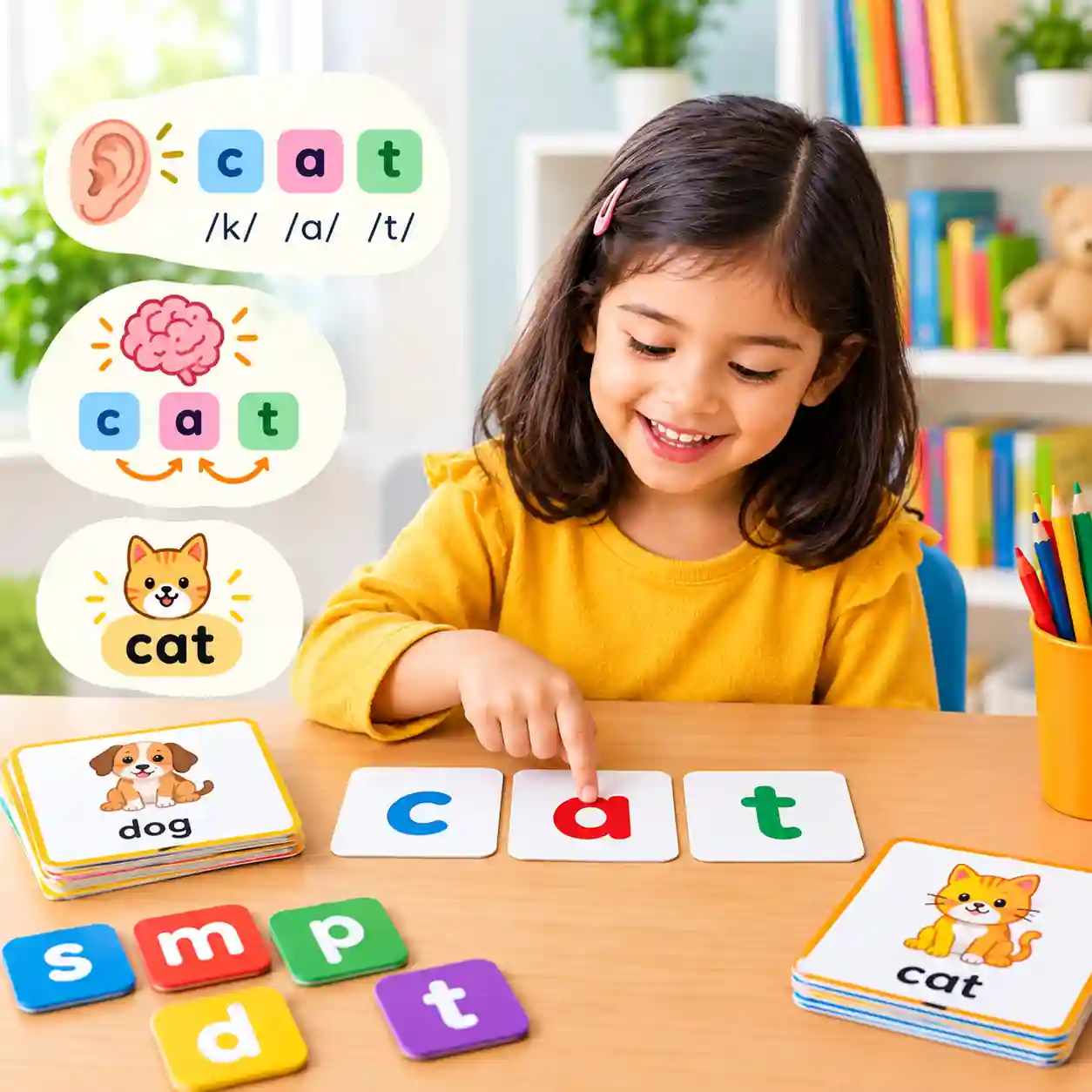
How to Teach Children to Blend Letter Sounds
Teaching children to connect letter sounds takes patience and regular practice. Start with sounds they already know and choose simple words that are easy to pronounce. Keep each learning session short and positive so children can practise without feeling overwhelmed.
Introducing Letter Sounds
Begin by helping children recognise the sounds made by individual letters rather than focusing only on letter names. For example, show the letter s and practise its sound, then introduce a and t. Use picture cards, letter magnets, or familiar objects to make learning more engaging. Make sure children are comfortable recognising these sounds before moving on to blending them.
Teaching Sound Blending to Preschoolers
Preschoolers can practise blending through simple, playful activities. Start by saying each sound in a word slowly, then gradually bring the sounds closer together. For example, use the sounds /s/, /u/, and /n/ to help children read “sun.” Say each sound clearly, then encourage them to join the sounds together. Start with easy words and offer gentle guidance until children can blend the sounds independently. Praise their effort and gently model the word again when they need help.
Blending Words for Beginners: CVC Word Examples
Blending words for beginners is easier when children start with short, familiar words. Consonant-vowel-consonant (CVC) words contain three sounds, making them useful for early phonics practice. Children can learn to recognise each letter sound and combine the sounds to read a complete word.
Common CVC Word Patterns
| Word | Letter Sounds | Blended Word |
|---|---|---|
| cat | /k/ /a/ /t/ | cat |
| map | /m/ /a/ /p/ | map |
| sit | /s/ /i/ /t/ | sit |
| dog | /d/ /o/ /g/ | dog |
| pin | /p/ /i/ /n/ | pin |
| bed | /b/ /e/ /d/ | bed |
| hop | /h/ /o/ /p/ | hop |
| cup | /k/ /u/ /p/ | cup |
Encourage children to say each sound clearly before blending the sounds into a complete word. Use letter cards or magnetic letters to make practice fun and engaging.
Phonics Blending Activities for Children
Phonics blending activities help children practise letter sounds and learn to read simple words through fun, hands-on learning.
Fun Letter Sound Blending Activities
- Sound Cards: Ask children to say the sound on each card and blend the sounds into a word.
- Magnetic Letters: Encourage children to arrange magnetic letters to make simple words like cat and map.
- Picture Matching: Let children blend a word and match it to the correct picture.
Blending Games for Kindergarten Children
- Build a Word: Give children letter cards and ask them to arrange the letters to form a word.
- Sound and Blend: Say individual sounds slowly and encourage children to blend them into a complete word.
- Word Hunt: Ask children to find and read familiar CVC words on a worksheet or in the classroom.
Keep the activities short and enjoyable to help children practise with confidence.
Common Sound Blending Challenges Children Face
Some children may find it difficult to connect individual letter sounds when they first learn to read. Regular practice and patient guidance can help them develop their blending skills.
Difficulty Combining Individual Letter Sounds
Children may say each letter sound separately without joining them to read the complete word. For example, they might say /c/, /a/, and /t/ but struggle to read cat.
Some children may also forget familiar letter sounds or guess words from pictures instead of blending. Giving them time to practise familiar words can help build their confidence.
Tips to Help Children Practise Sound Blending
Start with simple CVC words such as cat, map, and sit, and demonstrate how to blend each sound smoothly. Choose words that contain letter sounds children already know.
Keep practice sessions short and enjoyable, using letter cards or simple word games. Encourage children to try independently and praise their efforts as they improve.
Conclusion
Helping children blend letter sounds into words is an important step in building early reading skills. With simple CVC words, fun phonics activities, and regular practice, children can gradually improve their blending skills. Parents and teachers can explore Phonics Play for more ways to make early reading and phonics learning fun and engaging.
With patience and consistent practice, children can develop stronger blending skills and become more confident readers.
Frequently Asked Questions
Sound blending is combining individual letter sounds to read a complete word, such as /c/, /a/, /t/ to read cat.
Many children begin practising sound blending during preschool, once they become familiar with basic letter sounds.
CVC words contain a consonant, a vowel, and another consonant, such as cat, map, and sit.
Short, daily practice sessions of around five to ten minutes can help children improve their blending skills.
Children can start with simple CVC words such as cat, map, dog, and sit.
Sound blending helps children decode unfamiliar words and develop confidence in reading.
Enquire Form
Our Courses
- Phonics
- Grammar & Writing
- Spoken English
- Teacher Training