
How to Choose Phonics Books for Different Reading Levels
Home/Blogs
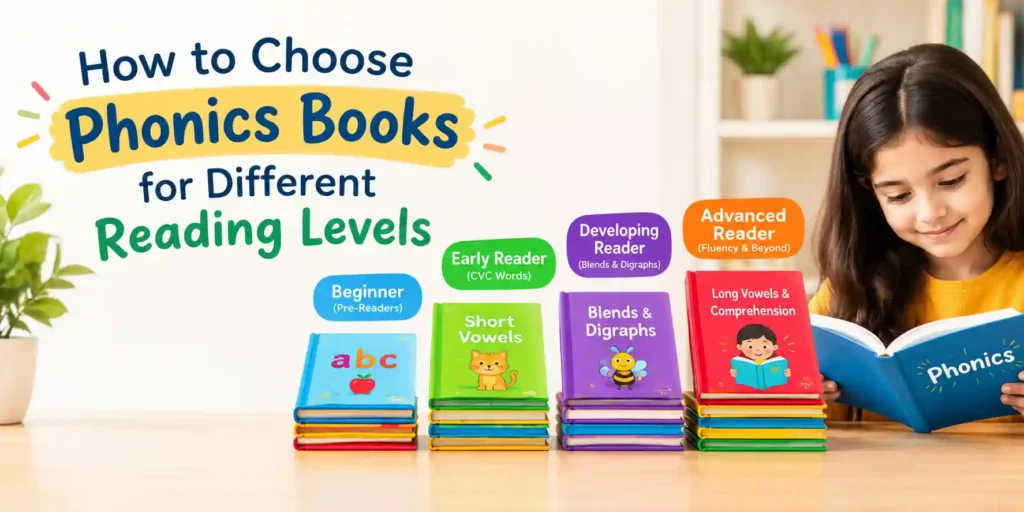
Choosing the right phonics books can help children develop reading skills step by step. The books children use should match their current abilities, from recognising letter sounds to reading simple words and short stories. Selecting books that suit their reading skills can help children practise with greater confidence and build a strong foundation for reading.
To choose the right book, parents need to understand which phonics skills their child has already learned and which ones need more practice. Books that match a child’s reading level provide opportunities to practise familiar sounds while gradually learning new patterns. In this guide, you’ll learn how to identify your child’s reading level, choose suitable phonics books for each stage, and recognise when your child is ready to move on to more challenging reading material.
How to Identify Your Child’s Current Reading Level
Before choosing phonics books, observe your child’s current reading skills. Some children may recognise letter sounds but struggle to blend them into words, while others can read simple words independently. Understanding these differences helps you choose books that match your child’s abilities and provide the right level of practice.
Signs Your Child Is Ready for Beginner Phonics Books
Children who are beginning to connect letters with their sounds may benefit from beginner phonics books. They might recognise a few letters, identify their sounds, or start blending sounds to read simple words such as cat, sun, and pin. Books with familiar letter sounds and simple words can help them practise these early skills.
Choose books that allow your child to read some words with little help. If they struggle with most words, start with simpler books and practise the sounds they already know.
Phonics Skills to Check Before Choosing a Book
Before selecting a book, check whether your child can recognise letter sounds, blend sounds to read simple words, and read familiar phonics patterns. For example, a child who can read consonant-vowel-consonant (CVC) words may be ready to practise these patterns in short sentences before moving on to consonant blends or long vowel sounds.
Choose books that build on familiar skills and introduce manageable challenges. If your child struggles with most words, consider an easier level.
Choosing the Right Books for Each Phonics Stage
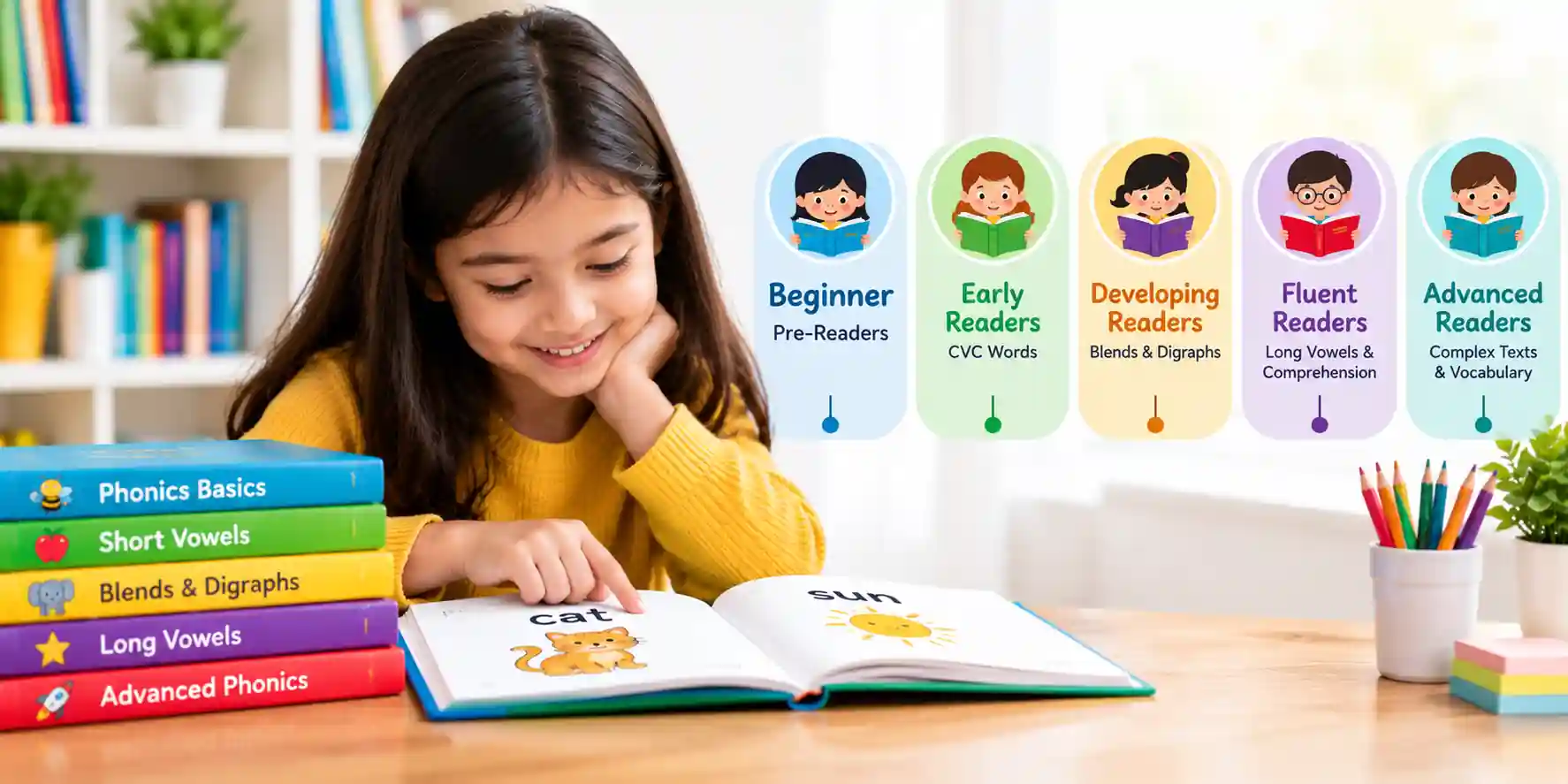
| Reading Stage | Phonics Skills | Suitable Books |
|---|---|---|
| Beginner | Letter sounds and simple CVC words | Beginner phonics books |
| Developing | Consonant blends and digraphs | Progressive phonics readers |
| Intermediate | Long vowels and alternative spelling patterns | Levelled decodable readers |
| Advanced | Multisyllabic words and complex spelling patterns | Advanced phonics storybooks |
Choose books that match the sounds and spelling patterns your child has already learned. If they struggle to read most words, try a simpler book; if they read comfortably, gradually introduce more challenging texts.
“Children learn as they play. Most importantly, in play children learn how to learn.” — O. Fred Donaldson
What to Look for in a Good Phonics Book ?
A good phonics book should match your child’s current reading skills and provide opportunities to practise familiar sounds. Look for books that introduce new patterns gradually, use clear language, and keep children interested in reading.
Decodable Words That Match Learned Phonics Skills
Choose books with words that use phonics patterns your child has already learned. For example, if your child is practising short vowel sounds, select stories with simple words that follow those patterns.
Books with too many unfamiliar spelling patterns can make reading difficult. Start with manageable text and introduce new patterns as your child becomes more confident.
Gradual Progression in Reading Difficulty
Good phonics books help children move from simple words to longer words and sentences step by step. Look for a series that introduces new sounds and spelling patterns gradually, giving children enough practice before moving forward.
If your child can read a book comfortably, try one with a few new challenges. If they struggle with many words, return to a simpler level and practise the skills they need.
Engaging Stories and Age-Appropriate Content
Children are more likely to enjoy reading when the stories match their interests and understanding. Choose books with clear illustrations, engaging characters, and age-appropriate themes while ensuring the text suits their phonics skills.
A colourful book alone does not guarantee effective phonics practice. Check that the words and sentences support your child’s reading development as well as their interest in the story.
Common Mistakes to Avoid When Choosing Phonics Books
Choosing books based only on a child’s age or the book’s popularity can lead to reading frustration. Instead, focus on your child’s current phonics skills and ability to read the words in the book.
Avoid these common mistakes when selecting phonics books:
- Choosing books that are too difficult: Too many unfamiliar words can make reading frustrating. Start with books that match your child’s learned phonics patterns.
- Moving to the next level too quickly: Children need enough practice with current sounds and spelling patterns before tackling more complex ones.
- Ignoring the child’s interests: Stories about familiar topics or favourite characters can make reading more enjoyable.
- Focusing only on colourful illustrations: Pictures can attract attention, but the words should also provide useful phonics practice.
Choose books that balance reading practice with enjoyment. When children can use their existing skills while gradually learning new patterns, they can develop confidence and become more independent readers.
When Should Your Child Move to the Next Reading Level?
Children may be ready for the next reading level when they can read their current books with confidence and recognise familiar phonics patterns without constant help. They should be able to blend sounds, read common spelling patterns, and understand what they are reading.
Signs Your Child Is Ready for the Next Level
If your child reads most words correctly, needs less help sounding out words, and can explain the main idea of a story, they may be ready for a new challenge. They should also feel comfortable reading books at their current level.
Try a slightly more challenging book and see how your child manages it. If they can read most words without frustration, gradually introduce new phonics patterns.
What If the Book Is Too Hard?
If your child struggles with many words, guesses frequently, or becomes frustrated, the book may contain phonics patterns they have not learned yet. Choose an easier book that helps them practise familiar sounds and words.
Give your child enough time to build confidence before moving ahead. Choose books based on their reading skills rather than age alone.
Conclusion
Choosing the right phonics books starts with understanding your child’s current reading skills. Select books that match the sounds and spelling patterns they have learned. Explore phonics learning resources to support your child’s reading practice and help them build skills step by step.
With suitable books and regular practice, children can build confidence and improve their reading skills. Focus on your child’s progress rather than age alone, and let them move forward at a pace that suits their needs.
Frequently Asked Questions
The best phonics books for beginners teach letter sounds and simple words. Choose books that match your child’s current reading skills.
Choose books based on the sounds and words your child can already read. Introduce new phonics patterns gradually.
Decodable books use words that children can read using the phonics skills they have learned. They help children practise sounding out words.
Check whether your child can recognise letter sounds, blend sounds, and read simple words. Choose books that match these skills.
Your child may be ready when they can read most words in their current books confidently. Introduce a slightly harder book and see how they manage it.
Choose an easier book that uses familiar sounds and words. Give your child more practice before introducing harder patterns.
Enquire Form
Our Courses
- Phonics
- Grammar & Writing
- Spoken English
- Teacher Training