
How to Use Phonics Flashcards at Home: Practical Activities for Children
Home/Blogs
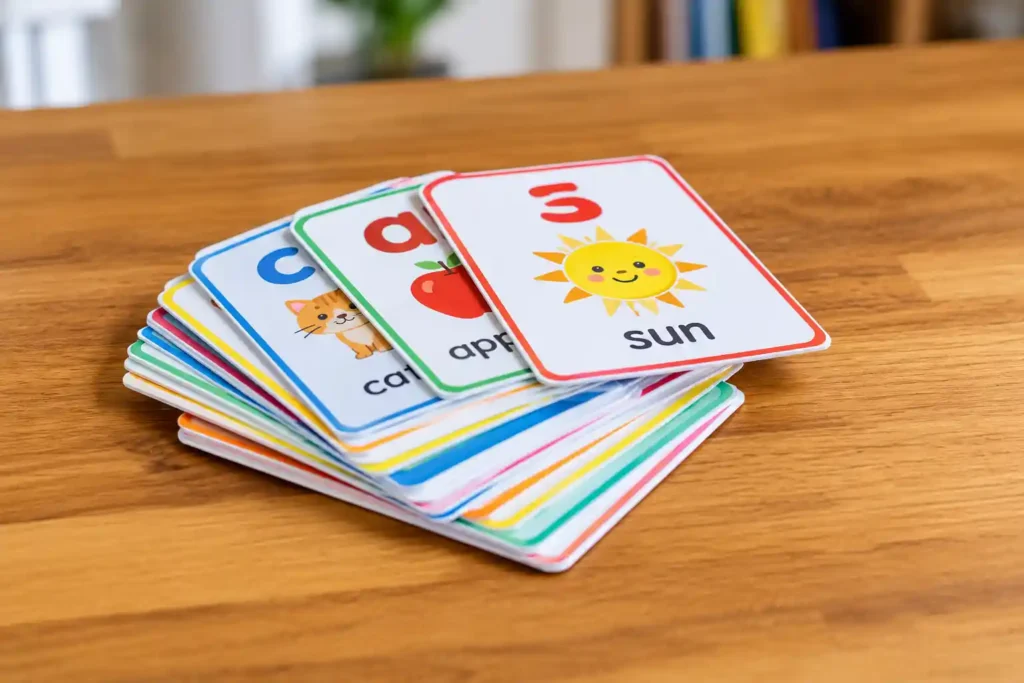
Helping children learn letter sounds can begin with simple activities at home. Phonics flashcards help children recognise letters, understand their sounds and begin reading simple words. Parents can use these cards through games and everyday activities to make learning enjoyable.
You do not need teaching experience or expensive materials. With a few flashcards and short practice sessions, you can support your child’s early reading skills. Here are some easy phonics flashcard activities to try at home.
What Are Phonics Flashcards?
Phonics flashcards are small cards that show letters, pictures or words. They help children connect letters with their sounds. For example, a card showing the letter B and a picture of a ball helps children learn the /b/ sound.
Some flashcards also include letter combinations, such as sh in ship and ch in chair. Children can use these cards to practise familiar sounds before moving on to simple words.
Benefits of Using Phonics Flashcards for Children
Phonics flashcards support early reading skills through simple and enjoyable activities.
- Recognising Letter Sounds: Children learn to connect written letters with their sounds.
- Improving Listening Skills: Children practise listening carefully and identifying beginning sounds in words.
- Learning to Blend Sounds: Combining individual sounds helps children read simple words such as cat, sun, and pin.
- Remembering Familiar Sounds: Regular practice makes it easier to recall sounds they have learned.
- Learning Through Play: Picture matching and sound games keep children interested.
- Building Reading Confidence: Recognising familiar words encourages children to try reading on their own.
- Easy Home Practice: Parents can use flashcards without expensive materials or special equipment.
How to Use Phonics Flashcards at Home
Start with a few sounds your child is ready to learn. Introduce one activity at a time.
1. Start with Simple Letter Sounds
Choose three or four letter cards. Show each card, say its sound clearly and let your child repeat it.
For example:
- S – /s/ as in sun
- A – short ‘a’ sound as in apple
- T – /t/ as in tap
- P – /p/ as in pen
Mix the cards and encourage your child to say each letter’s sound. If they forget one, repeat it gently.
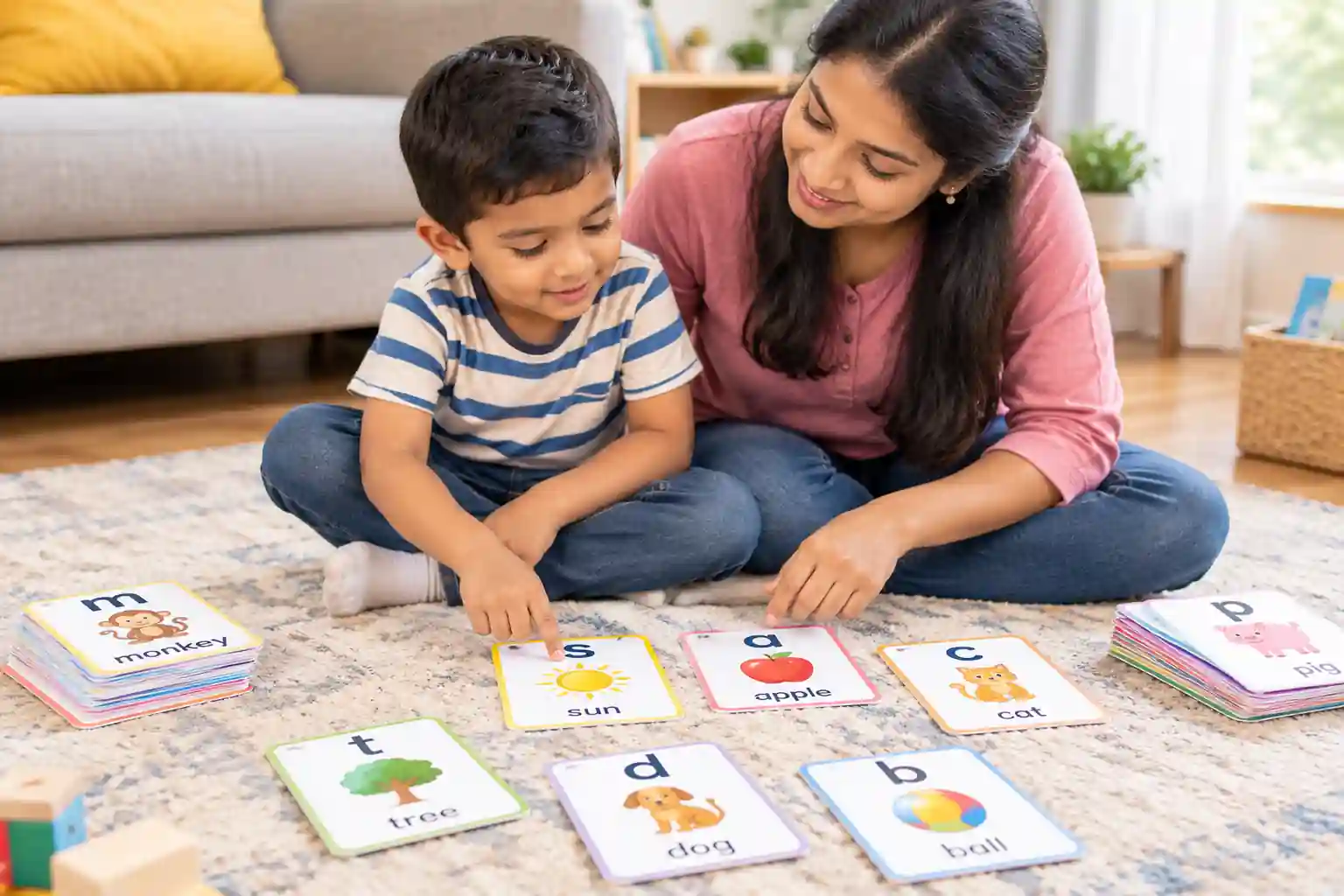
2. Match Flashcards with Pictures
Place letter cards and matching picture cards on a table.
Pick a picture, say its name and ask your child to find the letter matching its beginning sound.
For example:
- M – Moon
- S – Sun
- B – Ball
For a moon picture, help your child hear the /m/ sound and place it beside the M card.
You can also use pictures of fruits, animals and familiar objects.
3. Play a Sound Recognition Game
Arrange three letter cards, such as M, S and T.
Say /s/ without pointing to the card and let your child find S.
Next, show a card and encourage them to say its sound.
You can also let your child choose a card for you to guess, making the game interactive.
4. Practise Blending Simple Words
Blending means joining individual sounds to read a word.
Once your child knows a few sounds, arrange S, A and T to form sat.
S – A – T
/s/ + short ‘a’ + /t/ → sat
Point to each letter, say its sound slowly and then join the sounds to read the word.
Practise other simple words such as pat, mat and tap as your child learns more letter sounds
5. Try a Flashcard Memory Game
Choose three letter cards and three matching picture cards. Place all six cards face down.
Ask your child to turn over two cards and check whether the letter matches the picture’s beginning sound.
For example, B matches a picture of a ball.
Keep matching pairs together and turn unmatched cards face down again. Continue until all pairs are found.
Use fewer cards if the activity feels difficult.
6. Find Objects That Match the Sounds
Show a letter card and ask your child to find something at home beginning with that sound.
For example:
- C – Cup
- B – Book
- M – Mug
- P – Pen
For the letter P, your child can find a pen. Say “pen” together and listen for the /p/ sound at the beginning.
Try this activity in different rooms.
Tips for Parents Using Phonics Flashcards
A few simple habits can make flashcard practice easier and more enjoyable for children.
- Choose a Good Time: Practise when your child is relaxed and interested, rather than when they are tired or distracted.
- Keep Sessions Short: Start with five to ten minutes and adjust the time based on your child’s attention and interest.
- Say Sounds Clearly: Pronounce each letter sound correctly and help your child understand the difference between letter names and sounds.
- Give Time to Answer: Allow your child to think and respond at their own pace instead of answering immediately.
- Review Familiar Sounds: Revisit previously learned sounds regularly to help your child remember them before introducing new ones.
- Avoid Pressure: Keep activities relaxed and playful. If your child loses interest, take a break and try again later.
- Encourage Their Efforts: Appreciate small improvements and offer gentle guidance when your child finds a sound difficult.
Focus on making phonics practice a positive experience rather than completing every flashcard.
Moving from Flashcards to Simple Reading
Once your child can recognise and blend letter sounds, introduce short words using familiar letters.
For example, if they know S, A, T, M and P, practise words such as sat, mat, pat and tap.
Next, introduce a short sentence like “Sam sat.” Point to each word and encourage your child to read slowly.
You can also use simple decodable books containing sounds your child has learned. Read stories together, talk about the pictures and explain unfamiliar words to help your child understand the story.
Conclusion
Phonics flashcards are a simple way to support children’s early reading skills at home. Through letter sounds, picture matching and fun activities, parents can make learning more enjoyable. With regular practice, patience and encouragement, children can gradually build confidence and become more comfortable reading simple words.
Frequently Asked Questions
Cut paper or cardboard into small cards and write one letter on each. Use large, clear letters and add familiar pictures when needed.
Not necessarily. Simple colours and clear pictures are enough. Avoid too many decorations that may distract children from learning.
Yes. The same cards can be used for different activities based on each child's age, interests and learning ability.
Keep them in a small box or envelope. Organise the cards by letters or sounds so they are easy to find and reuse.
Picture cards introduce names of animals, objects and everyday items. Discussing these pictures helps children understand and remember new words.
Yes. A few cards can provide a simple learning activity during journeys or waiting times without requiring extra materials.
Choose a sound from a flashcard and encourage your child to find the matching letter in a storybook. This connects phonics practice with reading.
Enquire Form
Our Courses
- Phonics
- Grammar & Writing
- Spoken English
- Teacher Training